
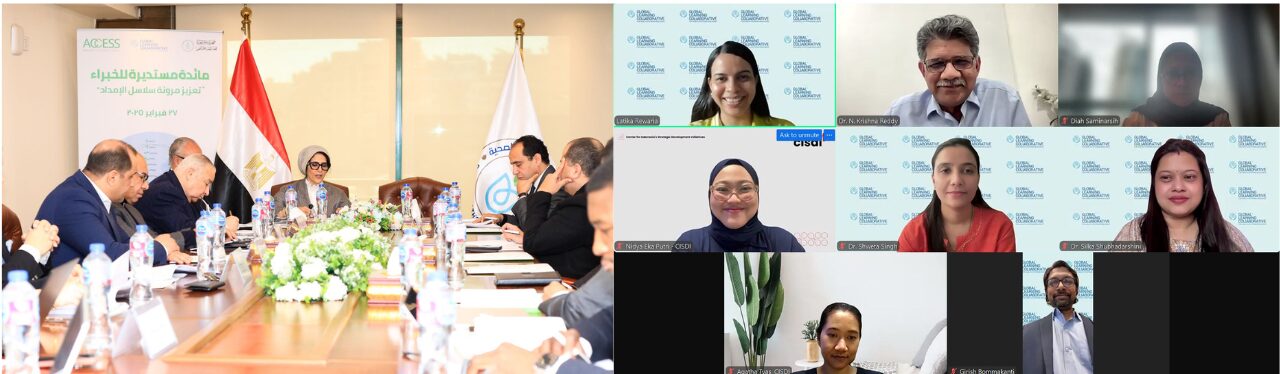
As a lead-up to the GLC4HSR Annual Conclave, two lead-up sessions set the stage for critical discussions on strengthening health systems. These sessions explored key challenges and innovative solutions in health supply chains, crisis response, and community-driven healthcare delivery, reinforcing the importance of collaboration and evidence-based strategies.
Strengthening Health Systems & Supply Chain Resilience
ACCESS Health International team in the MENA region, in collaboration with the Egypt Healthcare Authority (EHA), convened two high-impact roundtable discussions addressing Supply Chain Resilience and Health System Resilience in Conflicts and Mass Displacement. These discussions brought together industry leaders, policymakers, and experts to emphasize the urgent need for innovation, strategic investment, and regulatory reforms.
Key Insights:
- Supply Chain Resilience: Experts stressed the need for digital transformation, regulatory streamlining, and local manufacturing to mitigate supply chain disruptions. Key takeaways included the establishment of a national pharmaceutical database, addressing gaps in anesthesia drugs and biologics, and leveraging AI-driven analytics for real-time decision-making.
- Health System Resilience in Crisis Settings: Discussions focused on ensuring continuity of care during conflicts, integrating digital health solutions, and strengthening policy coordination. Egypt’s model for integrating refugee healthcare without international aid was highlighted as a sustainable approach.
- Looking Ahead: As Egypt advances its leadership in pharmaceutical manufacturing and healthcare innovation, ongoing investments in digital health and crisis preparedness remain vital for long-term resilience.
Peer-to-Peer Learning: Supportive Supervision in Primary Healthcare
A dedicated peer-to-peer learning session, held as part of the GLC4HSR lead-up events, focused on “Supportive Supervision in Primary Healthcare for Community Well-being.” The session, featuring experts from CISDI and ACCESS Health International, showcased Indonesia’s PN-PRIMA initiative – a model integrating mentorship, real-time data, and community engagement to strengthen healthcare delivery.
Key Takeaways:
- Mentorship & Competency Building: The initiative has led to over 70% of community health workers achieving advanced competencies in areas such as antenatal care, non-communicable diseases, and gender equity.
- Data-Driven Decision-Making: The integration of real-time data enables tailored health interventions, improving overall service delivery.
- Community Trust & Engagement: A participatory approach fosters trust, encourages health-seeking behavior, and ensures sustainability.
- Scalability & Adaptability: The initiative’s structured framework offers a scalable model for diverse healthcare settings, highlighting both opportunities and challenges in implementation.
Conclusion
Both sessions underscored the critical role of evidence-based policy, digital innovation, and community-driven approaches in shaping resilient health systems. These insights drove informed discussions at the GLC4HSR Annual Conclave on March 11-12, 2025, in New Delhi, where experts explored pathways to building sustainable and inclusive healthcare systems.