
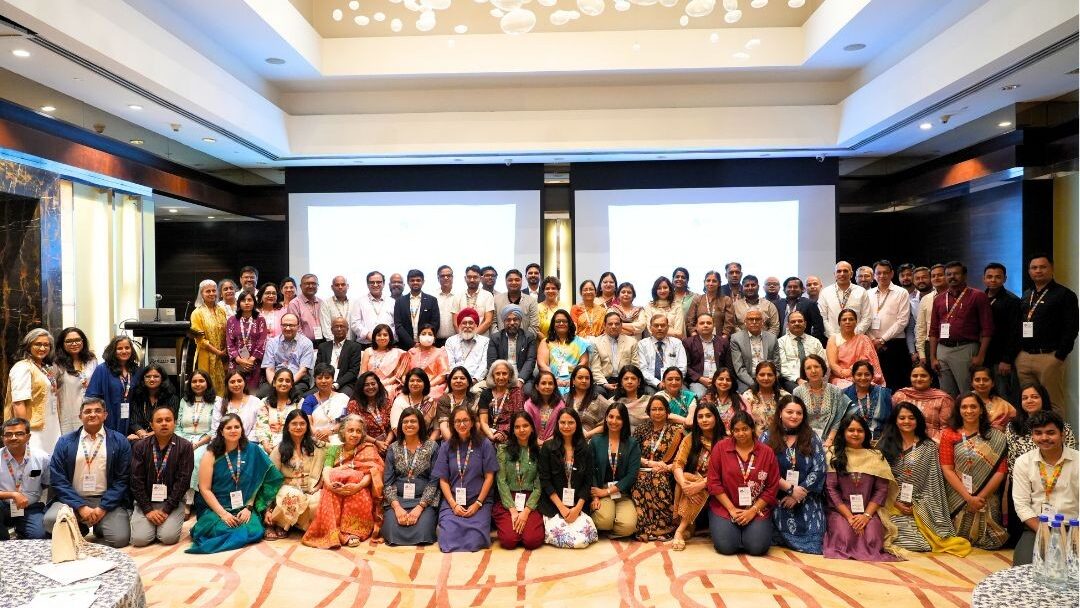
ACCESS Health International was represented by Mr. Maulik Chokshi, Global Director, Health Systems Research and Policy, at the National Stakeholder Workshop on Childhood Cancer convened by the Indian Childhood Cancer Initiative (ICCI). Maulik participated in a panel discussion on Financing Childhood Cancer Care, contributing perspectives on how health systems can better support children and families throughout the cancer care continuum.
Held under the theme “The Pediatric Cancer Convergence: Bridging Policy, Care, and Lived Experience,” the workshop brought together more than 100 stakeholders from the Ministry of Health & Family Welfare, NITI Aayog, ICMR, WHO, UNICEF, state health departments, clinicians, civil society organizations, and childhood cancer survivors and caregivers. The gathering served as an important platform to advance discussions on a future National Childhood Cancer Programme for India.
Key insights from the financing discussion
Looking beyond treatment costs
While medical treatment remains a significant expense, families often face substantial indirect and catastrophic costs related to travel, accommodation, lost income, and long-term caregiving. Effective financing models must account for the entire patient journey rather than focusing solely on hospital-based care.
Building on existing health system platforms
Programs such as Ayushman Bharat (PM-JAY) and the National Programme for Prevention and Control of Non-Communicable Diseases (NP-NCD) provide an important foundation for integrating pediatric oncology pathways at scale. Strengthening referral networks, defining treatment packages, and tracking survival outcomes can help improve access and quality of care nationwide.
Context-specific solutions are essential
Financing approaches must reflect the realities of different states and health systems. Strategies that work in Uttar Pradesh may differ significantly from those needed in Maharashtra, Gujarat, Odisha, Chhattisgarh, or Puducherry. Sustainable progress requires solutions that are responsive to local contexts and capacities.
Achieving global survival goals
India has made significant strides in strengthening clinical capabilities for childhood cancer care. Reaching the WHO Global Initiative for Childhood Cancer (GICC) target of 60% survival by 2030 will depend on ensuring that financing mechanisms evolve alongside these clinical advances.
The workshop also highlighted the important work of the Technical Expert Group on Childhood Cancer, chaired by Dr. L. Swasticharan, and benefited from the leadership and guidance of Dr. V.K. Paul, who attended as Chief Guest. Discussions underscored growing momentum toward positioning India as a formal focus country under the WHO Global Initiative for Childhood Cancer and accelerating efforts to improve outcomes for children diagnosed with cancer across the country