
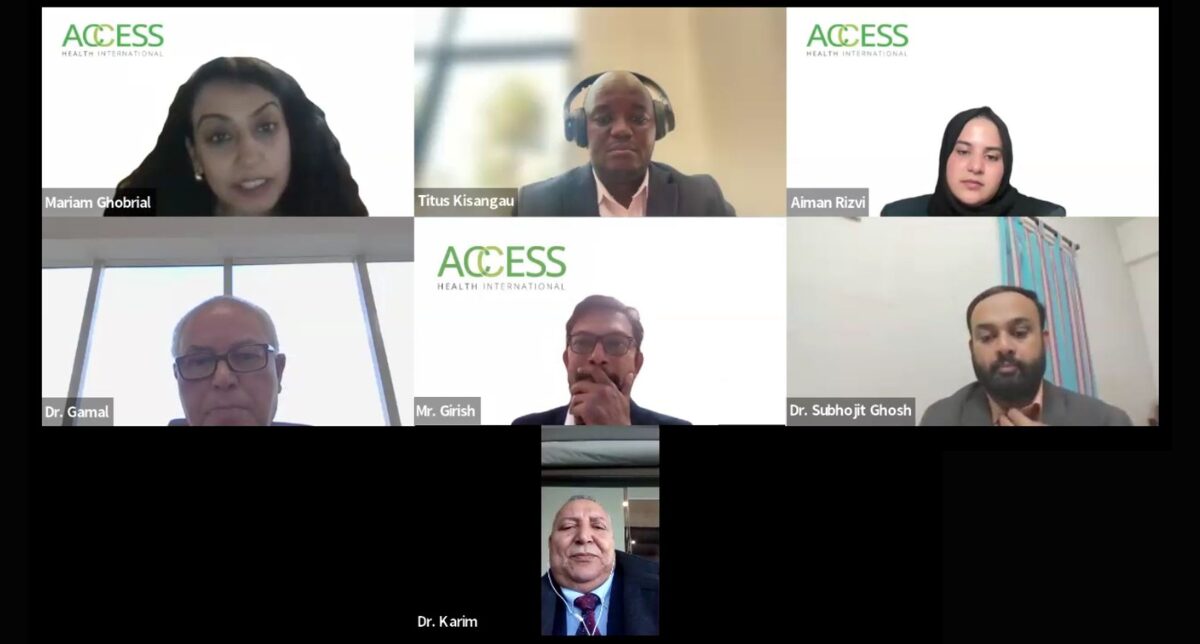
ACCESS Health International, in collaboration with the Joint Learning Network for Universal Health Coverage (JLN), convened a webinar titled Building Resilient Pharmaceutical Ecosystems for Universal Health Coverage in Low- and Middle-Income Countries (LMICs). The session was designed to bring together senior experts from regulation, industry, market access, and health systems across India, Egypt, and other LMICs to explore how pharmaceutical ecosystems can be strengthened to support equitable and sustainable access to medicines.
Moderated by Dr. Mariam Raouf, Lifesciences Manager – MENA, ACCESS Health International, the discussion focused on translating global and regional evidence into actionable lessons for policymakers, regulators, and implementing partners. The session emphasized the central role of pharmaceutical systems in health system resilience, particularly in the context of supply chain disruptions, rising demand for essential medicines, and the pursuit of universal health coverage.
The webinar opened with a research presentation by Syeda Aiman Rizvi, Research Manager – MENA, ACCESS Health International. Her presentation examined the evolution of India’s medical supply chain, outlining the policy, regulatory, and industrial enablers that have shaped the country’s emergence as the “Pharmacy of the World.” Drawing on historical and contemporary insights, the presentation highlighted how strategic public policy, regulatory strengthening, and private sector engagement have contributed to scale, affordability, and export readiness, while also noting ongoing challenges relevant to other LMICs seeking to strengthen domestic pharmaceutical capacity.
The panel discussion featured Mr. Girish Bommakanti, Global Director – Operations & Strategic Growth, ACCESS Health International; Dr. Gamal Elithy, Chairman, Pharmaceutical Chamber, Egypt; Dr. Subhojit Ghosh, AGM – Emerging Markets, Hetero; and Dr. Karim Smine, Independent Consultant, Pharmaceutical & Market Access Strategy. Panelists shared perspectives from regulatory, industry, and market access standpoints, underscoring supply chain resilience as a core health system priority rather than a standalone technical concern. Discussions highlighted the importance of progressing toward WHO regulatory maturity, leveraging mutual reliance mechanisms, and aligning national industrial strategies with realistic pathways for technology transfer and active pharmaceutical ingredient (API) manufacturing.
Speakers also reflected on the need for regionally connected pharmaceutical ecosystems that balance domestic production with cross-border collaboration, particularly in Africa, the Middle East, and Asia. The discussion emphasized that resilient pharmaceutical ecosystems require sustained investments in regulatory systems, skilled human resources, predictable market conditions, and trust-based partnerships between governments and the private sector.
The session concluded with a shared commitment from ACCESS Health International and the Joint Learning Network for Universal Health Coverage to continue supporting LMIC partners through structured learning, technical assistance, and advisory support. By fostering cross-country learning and evidence-informed dialogue, both organizations aim to advance resilient, regionally integrated pharmaceutical ecosystems that are essential for achieving universal health coverage.