
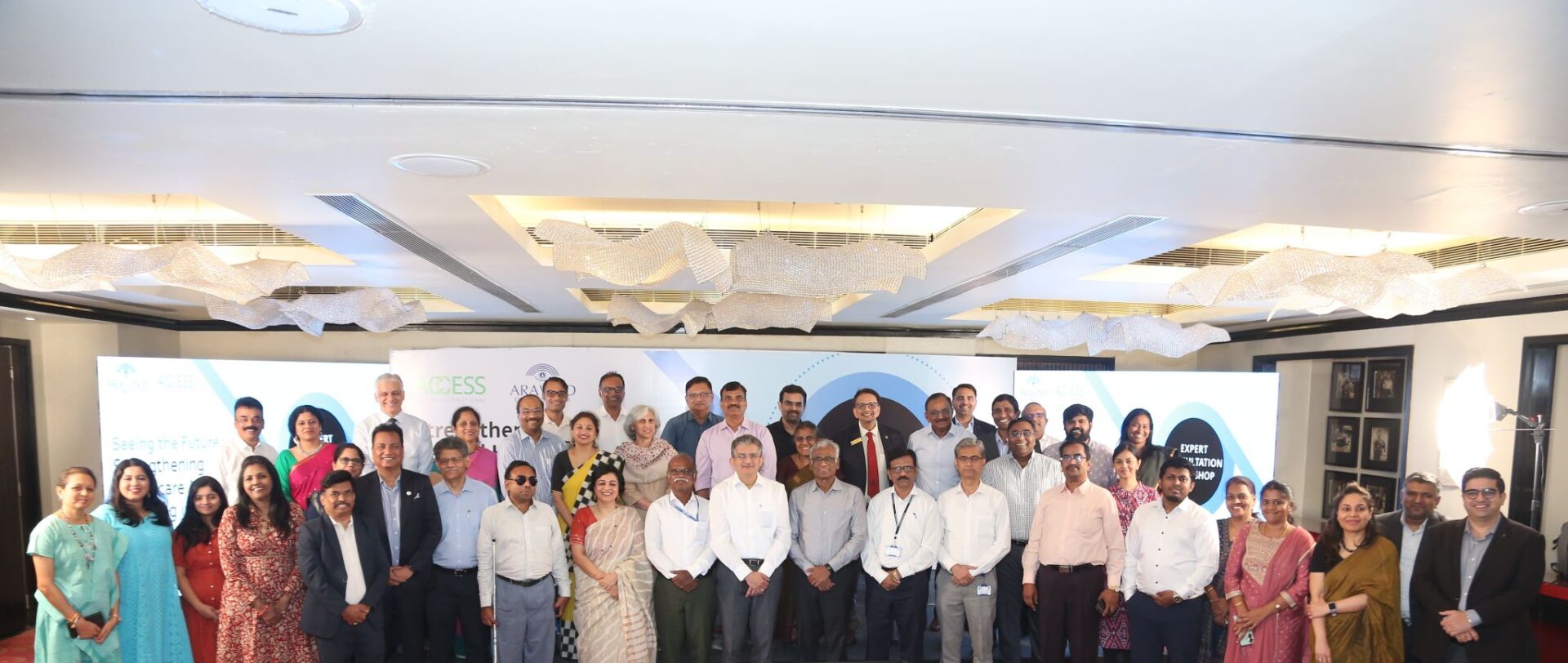
ACCESS Health International participated in the National Stakeholder Workshop convened by the Indian Childhood Cancer Initiative (ICCI), a multi-stakeholder platform working to strengthen childhood cancer care and advance the development of a National Childhood Cancer Programme in India.
The workshop brought together more than 100 stakeholders, including representatives from the Ministry of Health and Family Welfare, NITI Aayog, the Indian Council of Medical Research, the World Health Organization, UNICEF, state health departments, clinicians, civil society organizations, survivor groups, and development partners. The discussions focused on building a coordinated national approach to improve access to childhood cancer diagnosis, treatment, and long-term care.
Representing ACCESS Health International, Maulik Chokshi, Global Director, Health Systems Research and Policy, participated in a panel discussion on financing childhood cancer care. The session explored the policy and financing mechanisms required to improve access to care and reduce the financial burden experienced by affected families.
Discussions highlighted that the costs associated with childhood cancer extend beyond treatment expenses alone. Indirect costs, including travel, accommodation, loss of income, and other out-of-pocket expenditures, often contribute significantly to treatment abandonment and financial hardship. Participants emphasized the need for financing approaches that address the entire care journey rather than hospital-based costs in isolation.
The panel also explored opportunities to leverage existing health system platforms, including Ayushman Bharat–Pradhan Mantri Jan Arogya Yojana (PM-JAY) and the National Programme for Prevention and Control of Non-Communicable Diseases, to strengthen pediatric oncology pathways. Integrating defined care packages, referral mechanisms, and measurable outcomes within these programmes could help expand access to childhood cancer services at scale.
Another key theme emerging from the discussions was the importance of state-level implementation. Participants noted that financing approaches must reflect local contexts and health system capacities, recognizing that the needs and priorities of different states may vary considerably.
The workshop also reinforced the importance of India’s contribution to the World Health Organization’s Global Initiative for Childhood Cancer, which aims to achieve at least 60 percent survival for children with cancer globally by 2030. Participants noted that strengthening financing mechanisms and service delivery systems will be essential to achieving these goals.
The event benefited from the guidance of the Technical Expert Group on Childhood Cancer, chaired by Dr. L. Swasticharan, DDG & Director(EMR), Ministry of Health and Family Welfare, Govt. of India, and the leadership of Dr. Vinod K. Paul, Member, NITI Aayog, who attended the workshop as Chief Guest. The discussions underscored the growing momentum toward establishing a comprehensive national approach to childhood cancer care and advancing India’s engagement with global efforts to improve childhood cancer outcomes.
ACCESS Health remains committed to supporting evidence-informed policies and health financing approaches that contribute to equitable and resilient health systems.