
ACCESS Health International, in collaboration with the Kalinga Institute of Industrial Technology (KIIT), Bhubaneswar, and Wadhwani AI, conducted a study titled “Accuracy Assessment of AI-Powered Newborn Anthropometry Solution in Odisha.” The research, carried out in Khordha district, explored the potential of AI-powered tools to improve the accuracy of newborn anthropometry measurements – an essential step for recording growth at birth and monitoring early infancy.
Accurate measurement at birth forms the foundation for tracking early childhood growth and ensuring timely interventions. By evaluating innovative AI-powered solutions, the study seeks to complement the Government of Odisha’s ongoing efforts to strengthen newborn growth recording and streamline infant growth monitoring systems.
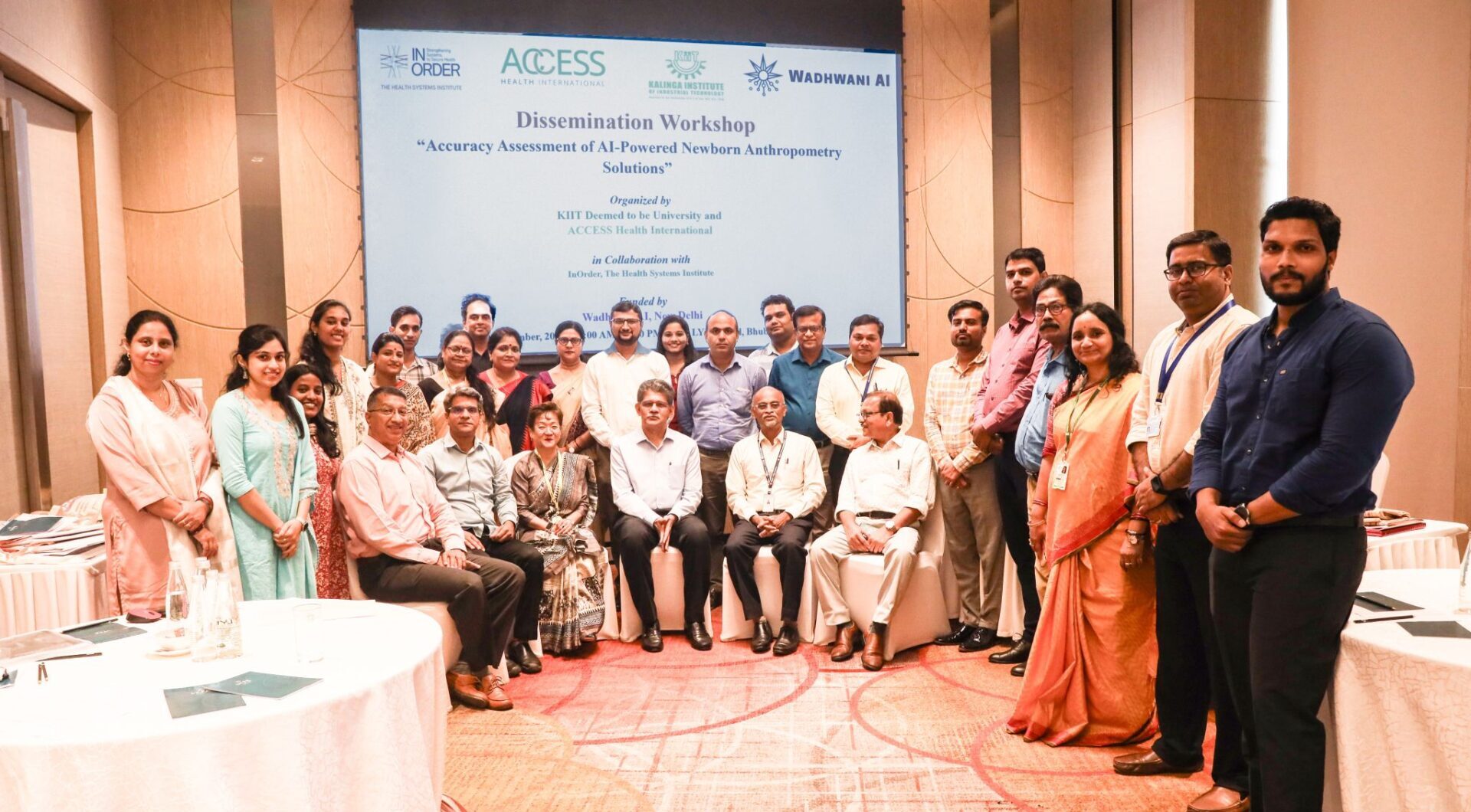
To share findings and identify pathways for integration, a Dissemination Workshop was held on September 9, 2025. The report was officially launched by Dr. Bijaya Kumar Mohapatra, Special Secretary, Health & Family Welfare Department, Government of Odisha, alongside Dr. N. Krishna Reddy, CEO of ACCESS Health International and President of InOrder; Prof. (Dr.) Bhuputra Panda, Professor of Public Health, KIIT-DU, and Senior Advisor, ACCESS Health International; Dr. Dinabandhu Sahu, Team Lead, SHSRC, National Health Mission Odisha; Dr. Shrikant Kalaskar, Technical Head – Public Health & Capacity Building, ACCESS Health International; and Dr. Ashok Jaybhaye, Program Manager – MNCH & Gen AI, Wadhwani AI.
The workshop convened officials from the Government of Odisha, health functionaries, researchers, and other stakeholders, who highlighted the promise of such technology-driven innovations in strengthening public health services. Discussions emphasized how AI-powered anthropometry solutions can enhance efficiency, ensure reliability in newborn measurement, and support more effective growth monitoring across healthcare facilities.
ACCESS Health continues to contribute to the advancement of evidence-based, technology-enabled health solutions that improve outcomes for newborns and children, while reinforcing government-led efforts to build resilient and inclusive health systems.