
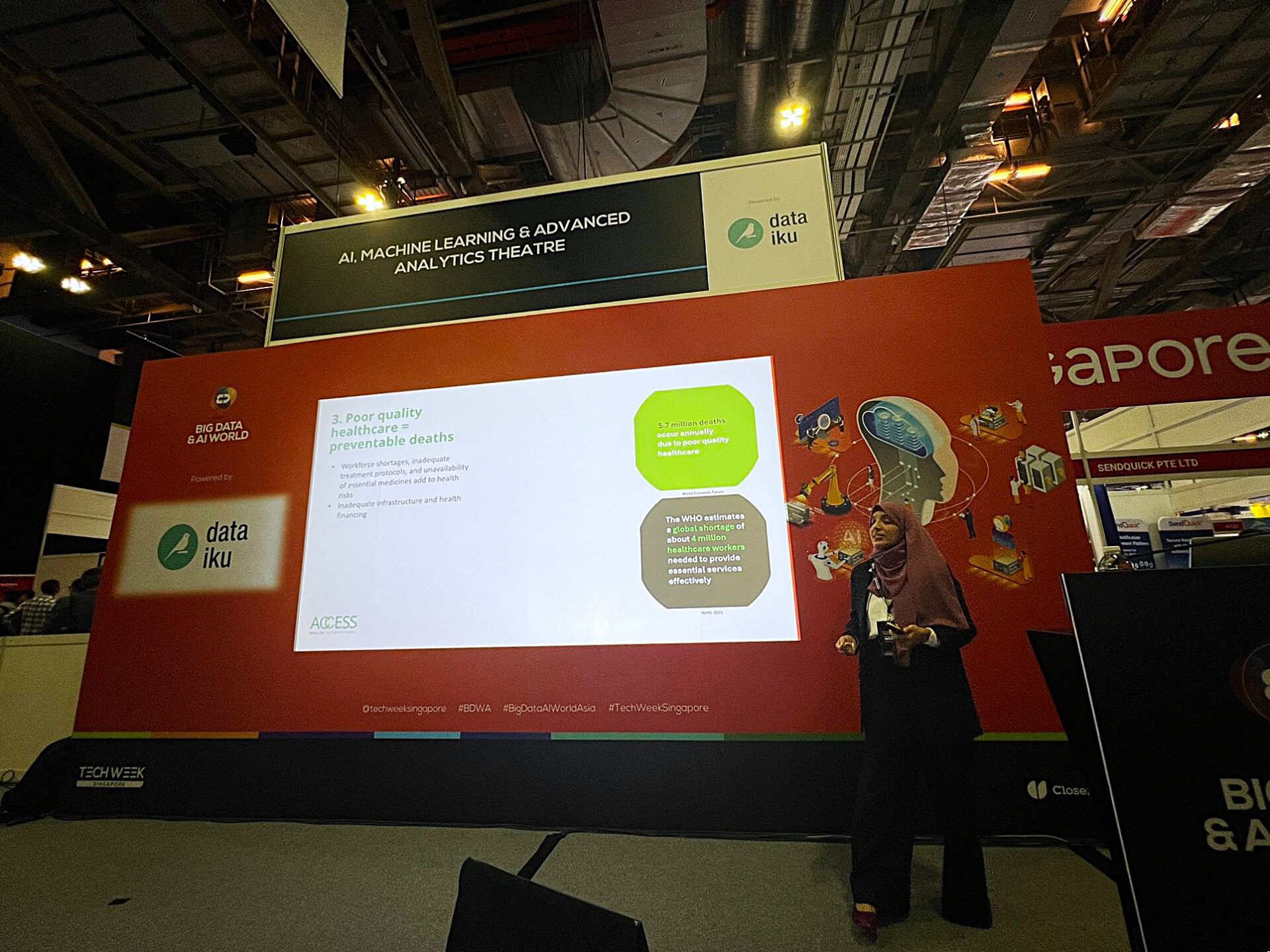
Ms Simeen Mirza, Associate Director at ACCESS Health International Southeast Asia, had the opportunity to share critical insights at Big Data & AI World Asia, a prominent forum focusing on the future of technology in various sectors. The event brought together experts from across the globe to discuss the potential of artificial intelligence (AI) in transforming industries – including healthcare. Ms. Mirza’s session addressed a pressing issue: the need to address the growing Health AI divide between countries and keep developing countries from falling behind.
During her presentation, Ms. Mirza outlined several key recommendations drawn from ACCESS Health’s research report on the APAC Responsible AI Ecosystem. This report sheds light on how AI can be a catalyst for more resilient, equitable, and sustainable healthcare systems across the Asia-Pacific region if deployed responsibly.
The following core strategies were emphasized to ensure that AI becomes an equalizer in healthcare, rather than a barrier:
- Tailoring AI Solutions to Local Needs:
AI applications must be customized to address the specific healthcare challenges of each country. This includes taking into account local disease burdens, digital literacy levels, and cost constraints. Ms. Mirza stressed that a one-size-fits-all approach will not work; AI solutions must be accessible and relevant to local populations.
- Building Trust Through Responsible AI Ecosystems:
Ms. Mirza highlighted the need for robust Responsible AI ecosystems, where policies and regulatory frameworks ensure the ethical use of AI in healthcare. Trust is essential for the widespread adoption of AI technologies, and this trust can only be built through clear regulatory guidelines and assurance mechanisms that protect patient data and rights.
- Strengthening National Health AI Strategies:
To keep pace with technological advancements, developing countries need comprehensive national Health AI strategies. These strategies should involve a wide range of stakeholders, including governments, healthcare providers, tech companies, and civil society organizations, ensuring that AI integration is both inclusive and transparent.
- Focusing Health AI R&D on Underserved Communities:
A significant portion of AI research and development should be directed towards underserved populations. Ms. Mirza underscored that AI has the potential to reduce healthcare disparities by improving access to care for remote or low-income communities. However, if AI systems are not designed with these communities in mind, they risk being left behind in the digital revolution.
Throughout her session, Ms. Mirza emphasized that these steps are not just recommendations but critical actions to ensure that the deployment of AI in healthcare serves to reduce healthcare disparities, rather than exacerbate the digital divide. Without deliberate efforts to create equitable AI systems, we risk leaving developing countries further behind in the race toward digital health innovation.
The insights shared at Big Data & AI World Asia align with ACCESS Health International’s mission to promote equitable access to high-quality healthcare through innovation. Our research into Responsible AI continues to influence policy discussions and guide healthcare leaders across the Asia-Pacific region toward more inclusive digital health strategies.
For more details on our work on Responsible AI and health systems resilience, stay tuned to ACCESS Health’s ongoing research initiatives and events.