
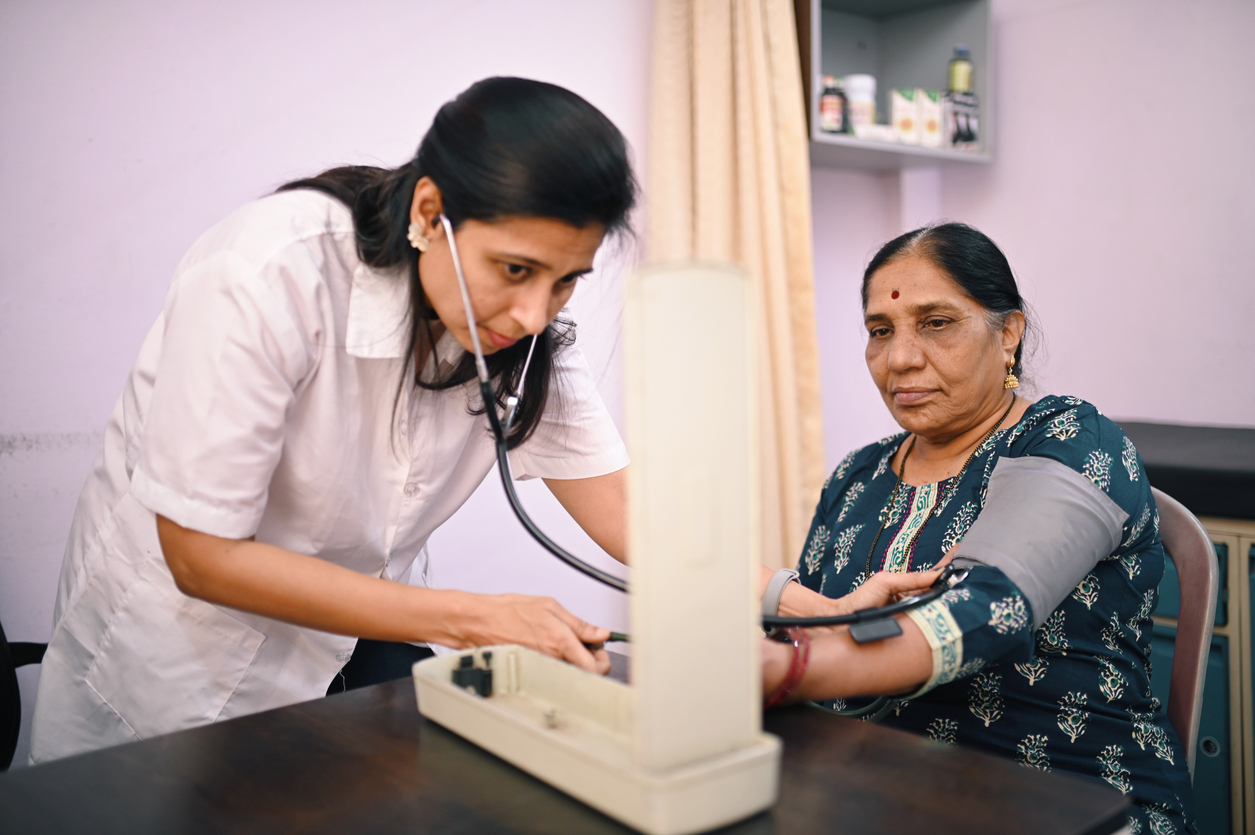
Health systems, everywhere, are under pressure. We face rising chronic disease, aging populations, workforce constraints, fragmented care pathways, and persistent inequities in access and outcomes. At the same time, expectations of health systems continue to grow: people want care that is timely, coordinated, affordable, and responsive to their needs over time, not only during episodes of illness.
In this context, health systems transformation requires more than new infrastructure, more technology, or more specialized services. It requires a different organizing logic. A population health management (PHM) approach offers that logic.
PHM asks a simple but powerful question: How do we improve health outcomes for defined populations by organizing care proactively, coordinating across levels, and addressing risks before they become crises?
This is a shift from treating illness one encounter at a time to managing health across the continuum, right from prevention, early detection, treatment, follow-up, rehabilitation, and long-term support. It does not replace strong clinical care; rather, it makes clinical care more effective, equitable, and sustainable.
A PHM approach begins by recognizing that health systems do not serve “average patients.” They serve populations with different risk profiles, social conditions, disease burdens, and care needs. A young adult with early hypertension, an older person living with diabetes and kidney disease, and a child requiring immunization follow-up each need different forms of engagement. A transformed health system must identify these differences and respond in a structured way.
This is where PHM becomes transformative. It helps health systems move from reactive care to proactive stewardship. It enables systems to stratify risk, identify vulnerable groups, prioritize outreach, coordinate care teams, and track continuity, not just utilization.
Importantly, population health management is not only about data. Data is essential, but PHM is not a dashboard exercise. Its value lies in how information is used to drive action: follow-up calls, referral closure, medication adherence support, community outreach, home-based monitoring, targeted screening, and timely escalation of care. Without these operational pathways, data remains descriptive rather than transformative.
At ACCESS Health International, we are advancing this approach through ongoing efforts that bring together PHM-Digital Health Architecture and Clinical Care Pathways solutions, health literacy and behaviour change communication, and capacity building as core pillars of transformation. We are planning to strengthen a PHM program in Telangana, with health literacy and behaviour change communication as a central component, recognizing that sustainable outcomes depend on informed and engaged patients and communities. This aligns closely with the work of TRUST Healthcare, which is already investing in patient education as part of its quality improvement efforts and serves as an important partner and real-world setting for testing PHM approaches. We are also implementing a PHM-focused initiative with the University of Hyderabad, aimed at designing and testing a people-centred integrated care model for noncommunicable disease risk reduction in an urban university community. The current phase includes structured baseline health assessments, risk stratification, digital data collection using Kobo tools, and capacity building of field teams, laying the foundation for a human-centred intervention model that can inform scalable pathways for prevention, care continuity, and long-term health system improvement.
A similar population health management lens informs our partnership with the Telangana State Road Transport Corporation (TSRTC), where ACCESS Health has signed an MoU to train depot-level health volunteers as the first point of contact for employee healthcare support. The collaboration focuses on capacity building for early identification and support, particularly for noncommunicable diseases, alongside IEC interventions to strengthen a culture of well-being. It is further enabled by innovative IT systems, including a command centre model, to support centralized health monitoring, better information flow, and more responsive employee health management.
A PHM approach also helps address one of the most persistent weaknesses in health systems: fragmentation. Too often, patients move through disconnected silos: primary care, diagnostics, specialists, hospitals, pharmacies, and community services; often without clear coordination or accountability. The result is delayed treatment, duplicate testing, avoidable complications, and high out-of-pocket costs.
Population health management helps reframe the system around continuity and accountability for outcomes, not just transactions. It encourages shared care pathways, clearer roles across providers, and mechanisms to ensure that patients do not get lost between services. In doing so, it improves both patient experience and system efficiency.
For policymakers and health system leaders, PHM also offers a practical bridge between public health and clinical care. In many settings, these domains operate in parallel. PHM creates a framework through which surveillance, prevention, primary care, hospital care, and community engagement can align around common population goals. This is particularly important for noncommunicable diseases, maternal and child health, mental health, and post-acute care, where outcomes depend on long-term coordination rather than one-time interventions.
Digital health can be a powerful enabler of PHM, but only if it is designed with this purpose in mind. Technology should support risk stratification, care coordination, referral tracking, longitudinal records, and actionable alerts for frontline teams. It should simplify patient navigation and strengthen continuity of care. If digital systems focus only on data capture and reporting, they will fall short of enabling true transformation.
The workforce dimension is equally important. PHM depends on team-based care—clinicians, nurses, care coordinators, community health workers, digital support teams, and managers working in alignment. It requires new capabilities in coordination, communication, and data-informed decision-making. Health systems transformation therefore must include investments in training and role redesign, not only tools and platforms.
At its core, a population health management approach moves us from a system that waits for illness to one that actively protects health. It asks us to see people not as isolated cases, but as part of communities and populations whose outcomes improve through better design, better coordination, and better accountability.
Health systems transformation is often described in broad terms. PHM helps make it concrete. It offers a way to connect policy intent with frontline practice, technology with care delivery, and efficiency with equity.
The question before us is no longer whether health systems need to transform. It is whether we are willing to organize them around the outcomes that matter most.
A population health management approach gives us a credible path forward.