
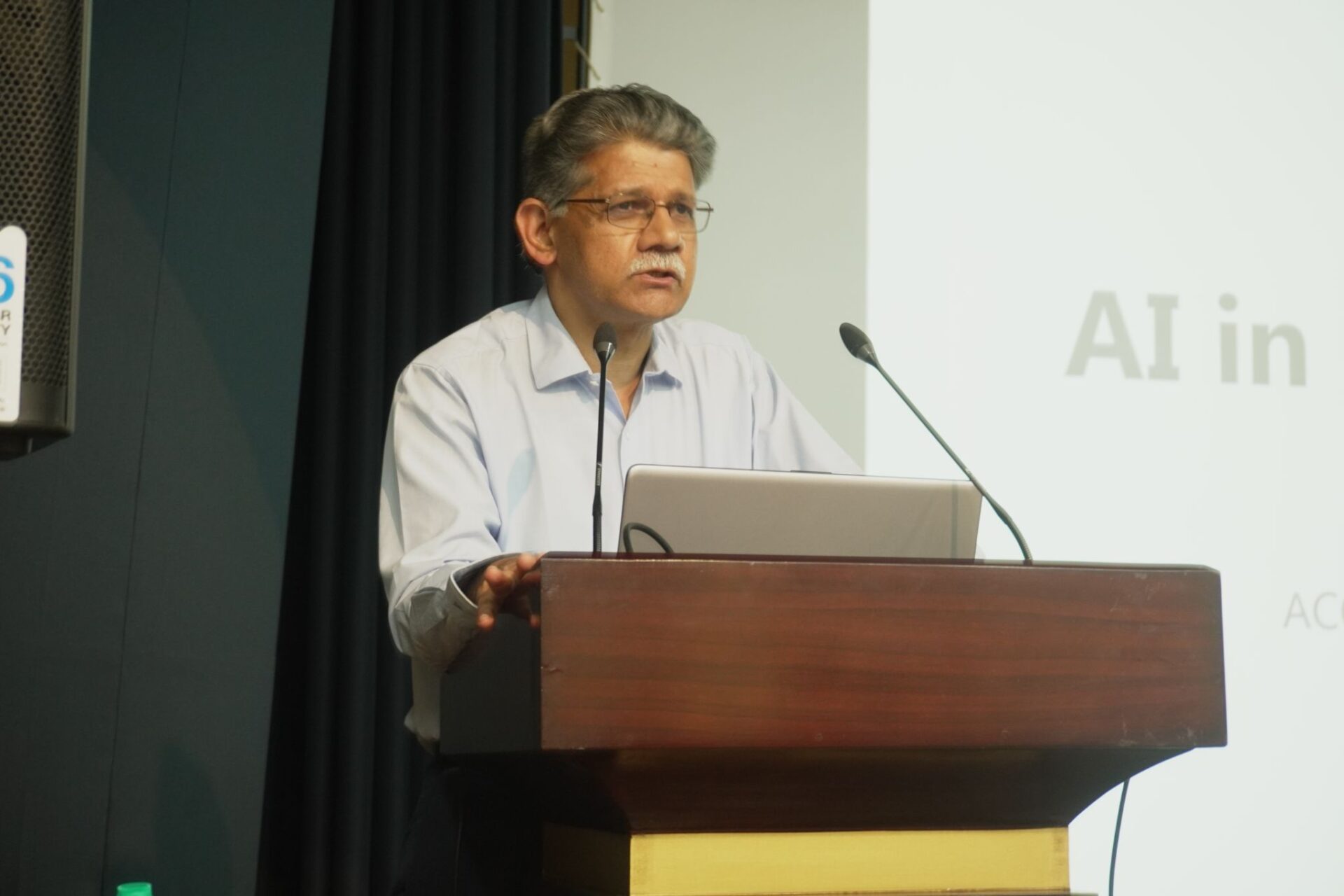
At the Reimagining AI in Healthcare event hosted at Atal Incubation Centre – CCMB, a recurring message cut through the excitement around technological advancement: artificial intelligence will only matter in healthcare if it meaningfully improves population health outcomes.
Speaking at the event, Dr. N. Krishna Reddy underscored that the promise of AI lies not merely in innovation but in its ethical and equitable application across health systems. Drawing from his experience working at the intersection of policy, implementation, and health systems strengthening, he highlighted how AI tools must be designed to respond to real-world challenges, particularly in diverse, resource-constrained settings.
Dr. Reddy emphasized the role of AI in bridging language and literacy gaps in health communication, strengthening disease surveillance, and supporting behaviour change interventions. However, he cautioned that technology alone cannot deliver impact. Human capacity, appropriate skills, strong governance frameworks, and ethical deployment are essential to ensure that AI solutions do not widen existing inequities.
The discussions at the event, also reported widely in national and regional media, reinforced the need for public health–oriented AI that prioritizes inclusion, transparency, and accountability. Experts stressed that investments in digital health must go hand in hand with investments in people, institutions, and systems.
For ACCESS Health International, these conversations align closely with ongoing work to support governments and partners in translating innovation into sustainable health impact. As Dr. Reddy noted, the real measure of success for AI in healthcare will be its ability to serve populations at scale, ethically, equitably, and effectively.